Choosing the right swimming pool sanitation system is an important decision for homeowners in Cyprus. With strong sunshine, warm temperatures and frequent summer use, maintaining clean and properly treated pool water requires an effective approach.
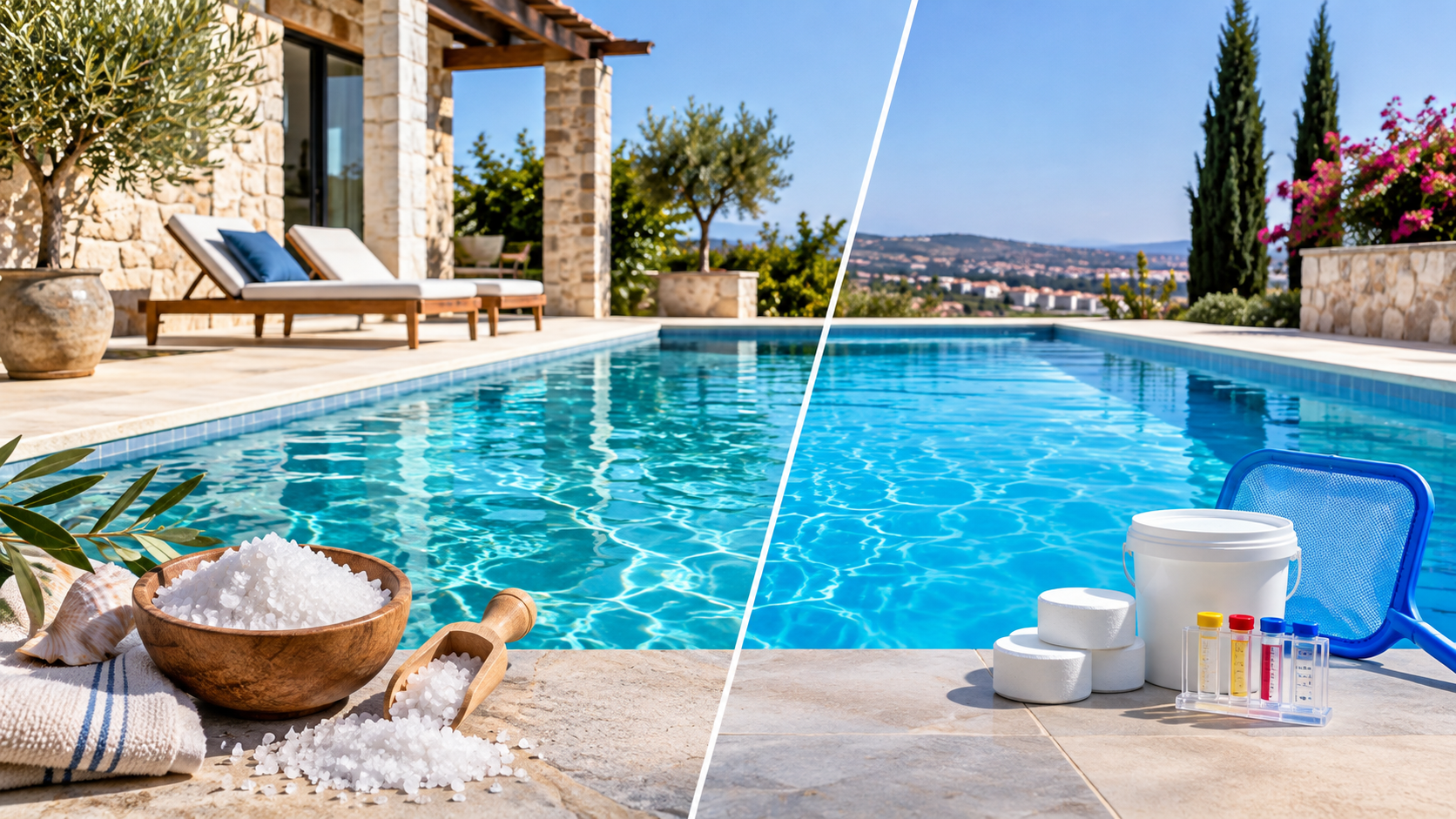
Two popular options are traditional chlorine treatment and saltwater chlorination. Understanding how they work can help you make the right choice.
How Does a Saltwater Pool Work?
A saltwater swimming pool uses a salt chlorinator that converts dissolved salt into chlorine through electrolysis.
Despite its name, a saltwater pool is not chlorine-free. Chlorine remains responsible for sanitising the water.
The main difference is how that chlorine is produced and introduced into the circulation system.
How Does a Traditional Chlorine Pool Work?
Traditional chlorine pools use chlorine products or dosing equipment to maintain suitable disinfectant levels.
This is a widely established method that offers flexibility in treatment products and equipment.
Effective sanitation depends on accurate dosing, water balance and regular testing.
Advantages of Saltwater Pools
Saltwater chlorination systems can provide a consistent method of producing chlorine while reducing some manual chemical handling.
They can be convenient for owners who prefer automated operation.
However, installation involves additional equipment, and the electrolytic cell requires inspection, cleaning and eventual replacement.
Equipment and surface compatibility with saltwater conditions must also be considered.
Advantages of Traditional Chlorine Pools
Traditional chlorine systems may involve a simpler initial installation, depending on the chosen equipment.
They provide various treatment options and allow dosing methods to be adapted to the specific swimming pool.
Nevertheless, chemicals must be handled and stored safely, and disinfectant levels must be carefully monitored.
Do Both Systems Require Maintenance?
Yes. Both systems require regular testing of free chlorine and pH, as well as appropriate filtration and cleaning.
A salt chlorinator does not eliminate routine pool maintenance.
During the Cyprus summer, sunshine and increased swimming activity can affect chlorine demand and water quality.
Which Option Is Better for Your Property?
The best choice depends on the size of the pool, frequency of use, initial investment, existing equipment and preferred level of automation.
For a new swimming pool, treatment equipment can be considered during the design stage. For an existing pool, compatibility and installation requirements should be assessed first.
Professional Swimming Pool Advice in Cyprus
AM Omirou LTD provides swimming pool construction and maintenance services in Cyprus.
Contact our team to discuss your swimming pool requirements and explore an appropriate water treatment solution.